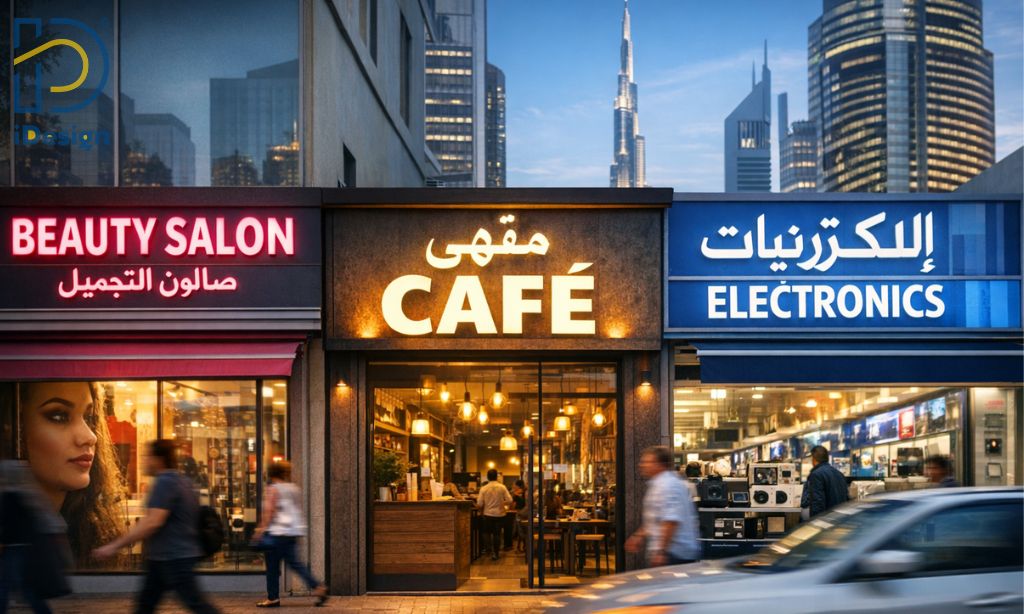
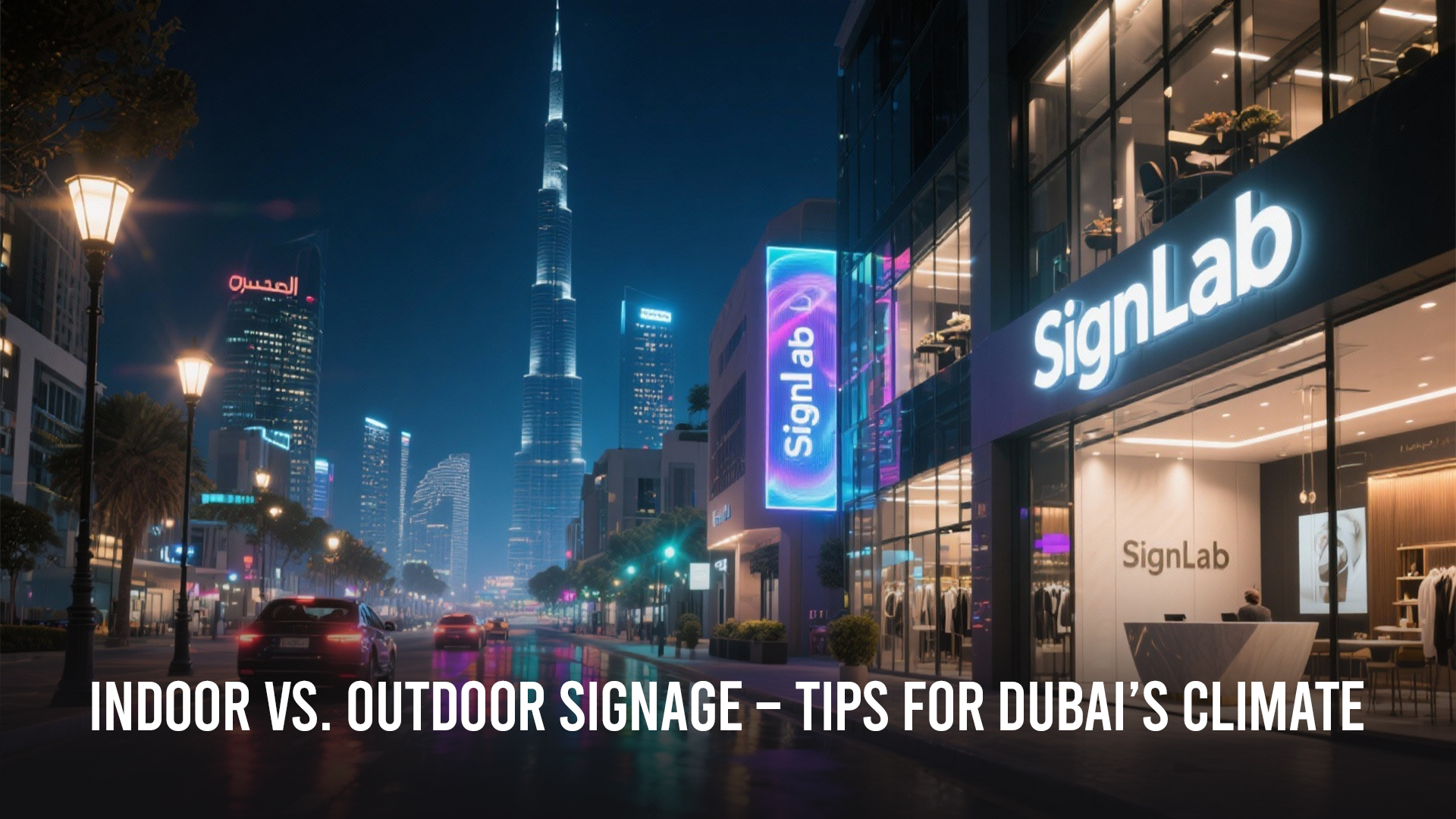
In Dubai, durability, visibility, and performance in harsh environmental conditions are just as important as design when it comes to signage. Selecting between indoor and outdoor signage requires careful consideration due to the high summer temperatures, extreme UV exposure, humidity, sand, and stringent local laws.

Businesses can avoid early failures, recurring maintenance expenses, and compliance problems by being aware of the distinctions between indoor and outdoor signage and how Dubai’s climate affects both.

Understanding Dubai’s Climate Challenges

The environment of Dubai poses particular difficulties for signage:

Summertime highs of more than 45°C

Fading and discoloration due to high UV radiation

Corrosion caused by coastal humidity

Sand and dust buildup that affects electronics and visibility

Dubai Municipality’s strict signage regulations

These considerations must be made at the beginning of every signage decision.

Indoor Signage: Controlled Environment, Refined Impact

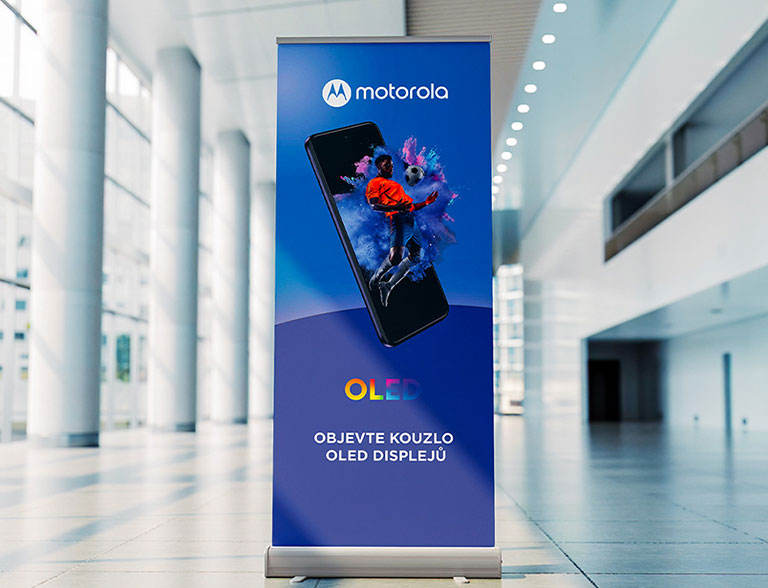
Because of its stable environment, indoor signage is perfect for branding, customer engagement, and navigation in shopping centers, offices, hotels, and retail establishments.

Dubai’s top indoor signage materials:

PVC and acrylic lettering

Fabric Lightboxes

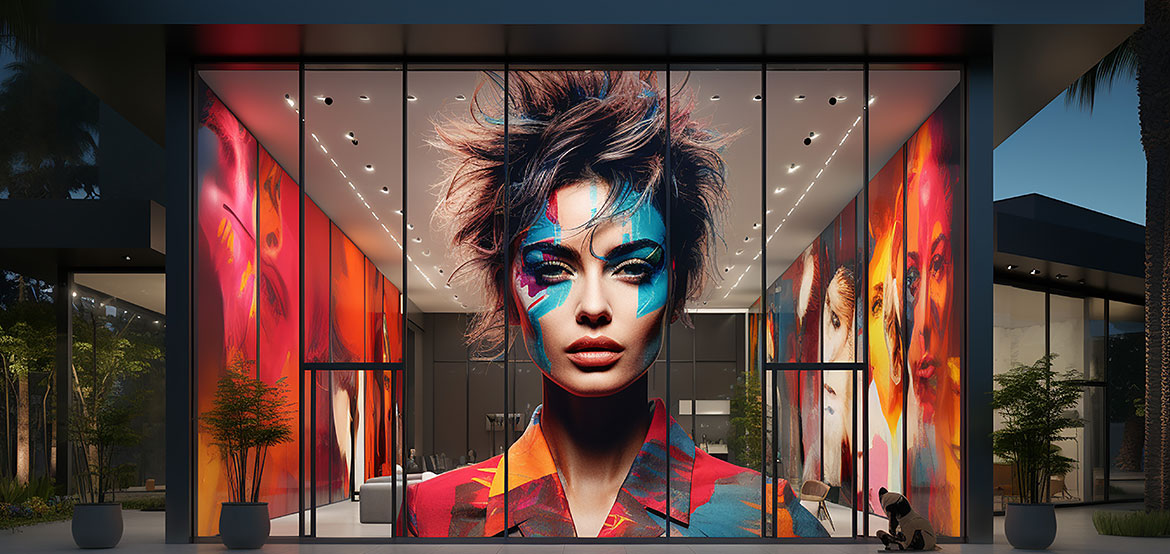
Glass graphics and vinyl walls

Moderately bright LED displays

Principal benefits:

Minimal exposure to UV radiation and heat

Longer life with less upkeep

Increased adaptability in lighting, color, and design

Economical for regular brand updates

Perfect uses:

Signage at the reception

Systems for wayfinding

Interior branding in retail

Displays for exhibitions and events

Even though indoor signage is not exposed to harsh weather, it must still endure continuous exposure to lighting and air conditioning, so material quality is just as crucial.

Outdoor Signage: Built to Withstand the Elements

In Dubai, outdoor signage serves as a brand’s first impression and must function perfectly in challenging circumstances.

Suggested materials for outdoor signage:

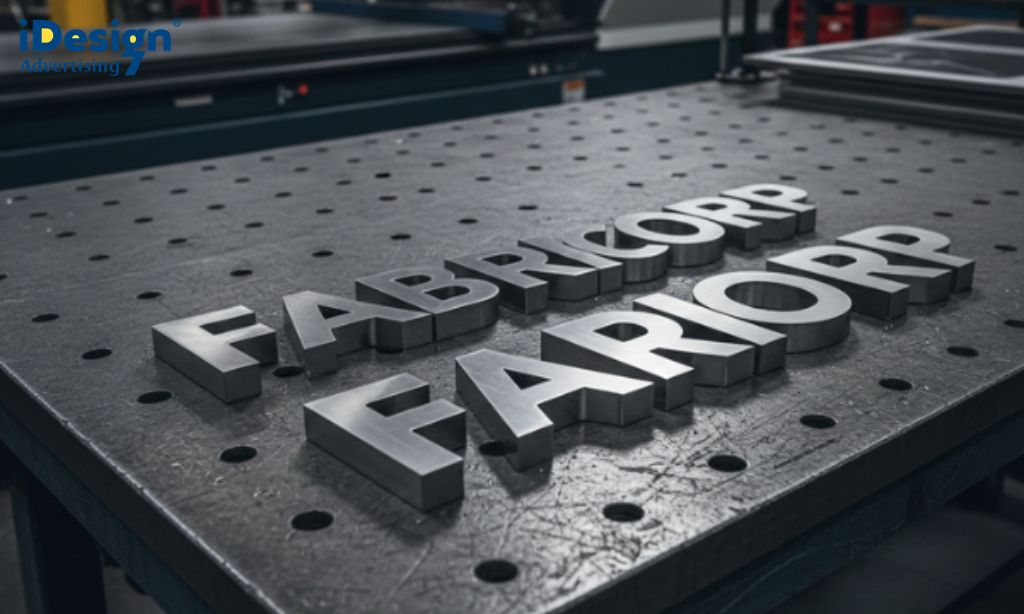
Stainless steel and aluminum

UV-resistant acrylic

Metal structures coated with powder

Weatherproof, high-lumen LED modules

Important points to remember:

UV resistance to stop fading

Electrical components and heat-resistant adhesives

Coastal areas’ anti-corrosion treatments

Appropriate ventilation and drainage

Typical forms of outdoor signage:

Signboards in stores

LED signs mounted on buildings

Pylons and totems

Parking signs and wayfinding

Additionally, official permits and adherence to Dubai’s size, lighting, and placement laws are necessary for outdoor signage.

Choosing the Right Signage for Your Business

Your goals will determine whether you choose indoor or outdoor signage.

Do you require road visibility? Signage outside is crucial.

Improving the in-store experience? The best signage is found indoors.

Store or shopping center? Consistency is ensured by combining the two.

The best branding tactics in Dubai combine outdoor and indoor signage into a cohesive system that is created, produced, and installed with climate resilience in mind.

Final Thoughts

Dubai’s climate demands more than attractive signage-it requires intelligent material selection, precise fabrication, and professional installation. Whether indoor or outdoor, signage must be engineered to perform, comply, and endure.

Working with experienced signage professionals ensures your brand remains visible, compliant, and impactful-no matter the conditions.

Post a comment

Your email address will not be published.

Related Posts