

Introduction
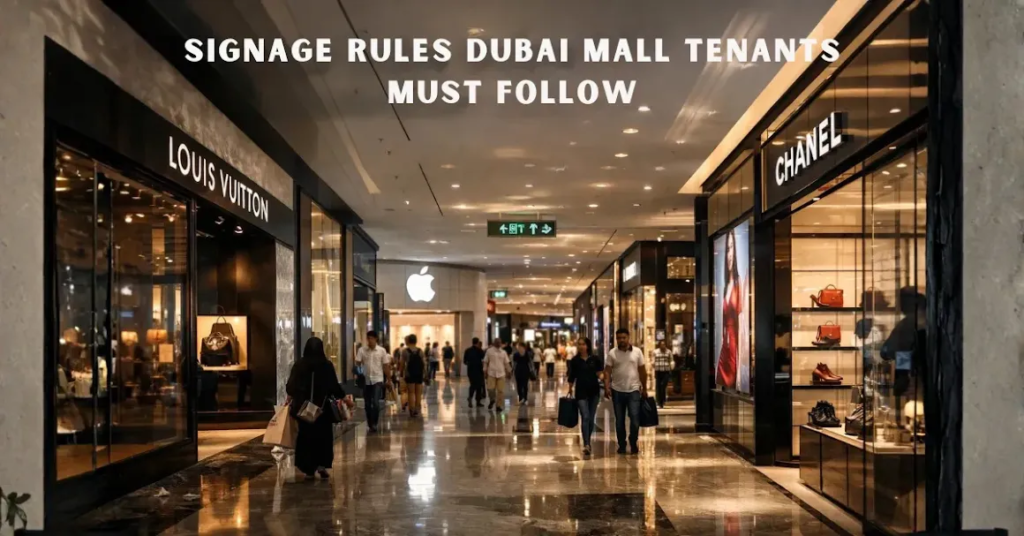
If you’re a tenant in a Dubai mall — or planning to open a store soon — understanding Dubai mall signage rules is essential from day one. What may seem like a simple shopfront sign often involves strict guidelines, multiple approvals, and detailed compliance requirements.
Signage regulations in Dubai malls are highly structured and strictly enforced, with approvals required from both mall management and Dubai Municipality. Missing a step can lead to delays, penalties, or even forced removal of your signage.
This guide covers everything you need to know about Dubai mall signage rules — including approval processes, timelines, design restrictions, and material guidelines — so you can stay compliant, avoid costly mistakes, and create signage that enhances your brand visibility.
Why Signage Rules Matter for Dubai Mall Tenants
Dubai mall signage rules are not just about compliance — they directly impact your brand visibility, customer perception, and overall business performance. For tenants in premium retail spaces, understanding and following these regulations is essential to avoid penalties and maintain a strong presence.
The Real Cost of Non-Compliance
Non-compliance can quickly become expensive — and in some cases, risky for your business.
Fines for unauthorised signage typically start at AED 5,000 and can go up to AED 50,000 for repeated or serious violations. But the real cost goes beyond fines. Removal charges, redesign and reinstallation expenses, and lost revenue during downtime can significantly affect your operations.
In some cases, signage violations may even lead to a breach of lease agreement terms, putting your tenancy at risk. Dubai mall management follows strict policies, and unauthorised signage is usually removed without exception.
How Compliance Improves Brand Visibility
Many tenants assume signage rules limit creativity — but in reality, they help enhance it.
Dubai malls maintain high aesthetic standards to create a premium shopping experience. When your signage complies with these guidelines, it blends seamlessly into this environment, attracting the right audience and reinforcing your brand image.
Non-compliant signage may never reach your customers if it gets removed. On the other hand, well-designed, approved signage stays visible, builds trust, and contributes to long-term brand recognition.
Explore professional Dubai mall signage design services
Do You Really Need Approval for Mall Signage in Dubai?
Yes — and it’s not just one approval.
Understanding the Dual Approval System
Dubai follows a dual approval system that often catches first-time tenants off guard. Before installing any signage, you must get approval from both mall management and Dubai Municipality — separately.
Mall management focuses on visual and brand consistency. They ensure your signage aligns with the mall’s design standards and doesn’t clash with nearby stores.
Dubai Municipality, on the other hand, reviews safety, structural integrity, and legal compliance.
Neither authority can override the other. Both approvals are mandatory before installation begins.
What Happens If You Skip Approval?
Skipping approvals isn’t a shortcut — it’s a risk.
Unauthorised signage can lead to:
- Immediate removal
- Fines and penalties
- Delays in store opening
- Potential lease violations
Even temporary signage, promotional displays, or seasonal decorations require prior approval. There are no exceptions.
Signage Approval Requirements & Timelines
| Signage Type | Mall Management | Dubai Municipality | Timeline |
| External Facade | Required | Required | 15–30 days |
| Internal Store | Required | Sometimes | 7–15 days |
| Temporary / Promotional | Required | Required | 5–10 days |
| Digital Displays | Required | Required | 20–45 days |
| 3D Installations | Required | Required | 15–30 days |
| Vinyl Graphics | Required | Rarely | 3–7 days |
Step-by-Step Signage Approval Process in Dubai Malls Tenants
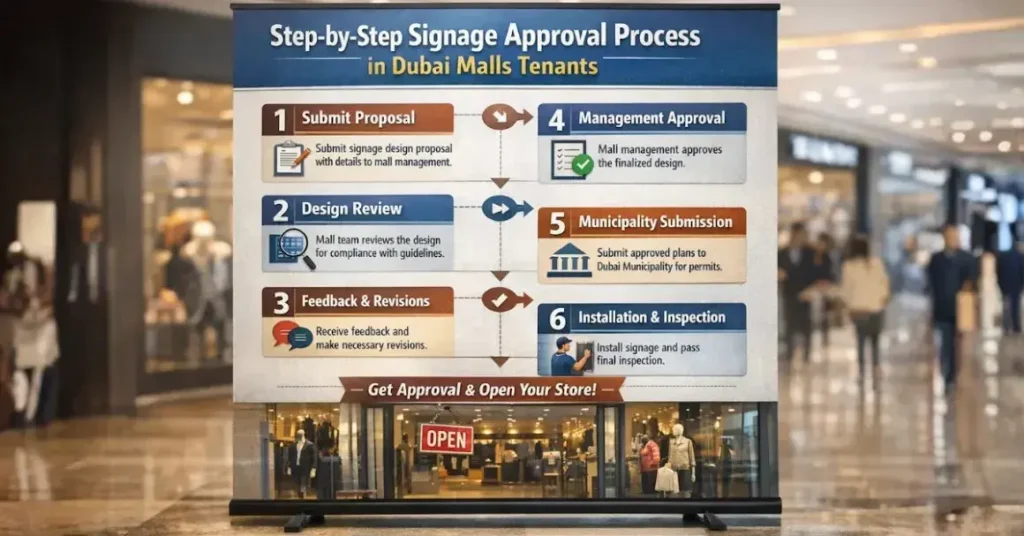
Getting signage approved in Dubai malls isn’t complicated — but it does require accuracy at every stage. Missing a document or skipping a step can delay your store launch significantly.
Here’s how the process works
Phase 1 — Documentation Preparation
This is where most approvals succeed or fail.
Start by following mall management requirements, as they often have specific formats and technical guidelines that differ from municipality standards.
You’ll typically need:
- Design drawings (CAD format, properly scaled)
- Material specifications with fire safety certificates
- Structural calculations (if applicable)
- A valid trade licence copy
- A mall-specific No Objection Certificate (NOC) signed by the landlord
One common mistake: submitting an expired trade licence. This leads to immediate rejection, regardless of everything else.
Phase 2 — Submission and Review
Always submit a complete application package.
Incomplete submissions are usually rejected outright — not returned for correction — which can cost you weeks in delays.
Mall management reviews design, branding, and visual compliance
Dubai Municipality checks safety, structure, and legal standards
Since multiple departments are involved, timelines can vary even when everything is correct.
Common reasons for rejection:
- Incorrect dimensions
- Use of non-compliant materials
- Poor visibility or impact assessment
Addressing these early improves your approval chances significantly.
Phase 3 — Installation and Final Inspection
Installation can begin only after receiving written approval from both authorities.
Verbal approvals are not valid and won’t protect you in case of disputes.
After installation, a final inspection is conducted to ensure your signage matches the approved design exactly. Even small deviations can result in:
- Violation notices
- Penalties
- Removal orders
Think of the approved design as your official contract — what gets approved must be what gets installed.
Required Documentation Checklist
| Document Type | Mall Submission | Municipality | Notes |
| Design Drawings (CAD) | ✓ | ✓ | Scale 1:50 minimum |
| Material Specifications | ✓ | ✓ | Fire safety certificates |
| Structural Calculations | — | ✓ | Engineer signed |
| Trade License Copy | ✓ | ✓ | Valid and current |
| NOC from Landlord | ✓ | — | Mall-specific format |
| Installation Timeline | ✓ | ✓ | Detailed schedule |
Book a Dubai mall signage approval consultation
Dubai Mall Signage Design Rules (Size, Materials & Lighting)
Getting your signage design right is critical for approval in Dubai malls. These rules aren’t just about compliance — they directly impact how fast your signage gets approved and how effectively your brand stands out in a premium retail environment.
Size and Placement Restrictions
Most Dubai malls allow primary signage to cover 10–15% of the total storefront area, but this varies depending on the property, floor level, and zone.
- Ground floor stores often have stricter height and size limits due to higher foot traffic
- Upper-level units may have slightly more flexibility
- Corner stores sometimes get additional signage allowances — but only if approved
Always follow property-specific guidelines instead of assuming standard limits.
- Approved Materials and Safety Standards
Material compliance is non-negotiable in Dubai mall signage approvals.
- Class A fire-rated materials are mandatory for primary signage
- Class B materials may be allowed for secondary elements like vinyl graphics
- Structural components must meet higher safety requirements
Non-compliant materials are rejected immediately, regardless of design quality.
Lighting Guidelines and Energy Efficiency
LED lighting is the standard for modern signage in Dubai malls due to its efficiency and compliance benefits.
- Illumination levels must stay within approved limits
- Colour temperature should match mall-wide standards
- Flashing or dynamic lighting is generally not permitted
These rules ensure a consistent and premium visual environment across the mall.
Brand Consistency Requirements
In Dubai malls, overall property aesthetics take priority.
- Colour schemes must align with mall guidelines
- Fonts and typography may have restrictions
- Logo size and proportions must follow set standards
While this may feel restrictive, it actually enhances the overall shopping experience — which benefits your brand visibility in the long run.
Material Approval Status for Dubai Mall Signage
| Material Type | Approval Status | Fire Rating Required | Cost Impact |
| Acrylic (Cast) | Approved | Class A | Medium |
| PVC Foam | Restricted | Not Applicable | Low |
| Aluminum Composite | Approved | Class A | High |
| Vinyl Graphics | Approved | Class B | Low |
| LED Modules | Approved | Class A | High |
| Stainless Steel | Approved | Class A | High |
How Much Does Mall Signage Cost in Dubai?
Mall signage costs in Dubai vary depending on design, materials, approvals, and installation. Many tenants focus only on fabrication, but the total investment includes several additional components that can significantly impact your budget.
Fabrication and Installation Costs
The base cost depends on the type and quality of signage:
- Basic acrylic signage: AED 150–300 per sq. ft.
- Premium 3D signage with LED backlighting: AED 400–800 per sq. ft.
While premium signage costs more upfront, it often delivers better visibility, durability, and long-term value.
Installation typically adds:
- AED 100–200 per sq. ft.
- Higher costs for complex setups, specialised equipment, or non-trading hour work
Hidden Costs to Consider
Beyond fabrication and installation, there are additional expenses that are often underestimated:
- Approval fees: AED 1,000–5,000 depending on complexity and revisions
- Consultant fees (if hired): AED 2,000–10,000
- Design revisions: Can increase both time and cost if not planned properly
These costs are essential for compliance and smooth approvals
Maintenance and Long-Term Costs
Signage isn’t a one-time investment — it requires ongoing maintenance.
- Annual maintenance typically costs 10–15% of the initial signage value
- Poor maintenance can lead to compliance issues, penalties, or forced replacements
Planning for maintenance from the beginning helps avoid unexpected expenses later.
Common Dubai Mall Signage Mistakes and How to Avoid Them
Common signage mistakes in Dubai malls can lead to approval delays, rejections, and costly rework. Experience teaches expensive lessons—but learning from others’ mistakes costs nothing. Understanding these common errors helps tenants follow Dubai mall signage rules more effectively.
Design Phase Mistakes
Incorrect size calculations represent the most common rejection cause. Many tenants assume maximum allowable dimensions without consulting property-specific guidelines. Each mall has unique restrictions based on architectural features and zoning classifications.
Non-compliant materials chosen for cost savings backfire spectacularly. Cheap materials face rejection, forcing complete redesign and resubmission delays.
Approval Process Errors
Starting installation before receiving written approvals creates legal nightmares. Verbal confirmations don’t protect against compliance enforcement — only written documentation provides legal protection.
Ignoring mall brand guidelines shows disrespect for property standards and guarantees rejection. Study guidelines thoroughly before design development begins.
Working with experienced signage professionals eliminates most common mistakes while streamlining approval processes significantly.
How to Avoid Signage Mistakes in Dubai Malls
The easiest way to prevent delays and rework is to plan ahead and follow the process correctly.
- Work with experienced signage professionals
- Double-check documentation before submission
- Align design with both compliance and branding requirements
A well-prepared approach not only speeds up approvals but also saves significant time and cost in the long run.
What Happens If Your Signage Doesn’t Meet Dubai Mall Rules?
Not following Dubai mall signage rules can lead to immediate and costly consequences. Enforcement is strict, and penalties are designed to ensure full compliance — not negotiation.
Penalty Structure and Fines
First violations typically receive warning notices with 7-day correction periods — but don’t count on this leniency for obvious violations.
Fines range from AED 5,000 for minor infractions to AED 50,000 for serious safety violations. Repeat offenses face maximum penalties without warning periods. Payment doesn’t excuse the violation — removal’s still required.
Forced Removal Process
Forced removal happens at tenant expense, adding insult to financial injury.
Removal costs typically exceed original installation expenses due to emergency service premiums and disposal requirements. Business disruption during removal periods creates additional revenue losses most tenants don’t anticipate.
Impact on Lease and Business Operations
Lease agreement violations may result from signage non-compliance, potentially affecting tenancy renewal negotiations.
Repeated violations can damage your relationship with mall management and put your business continuity at risk.
Best Types of Signage That Work Well in Dubai Malls
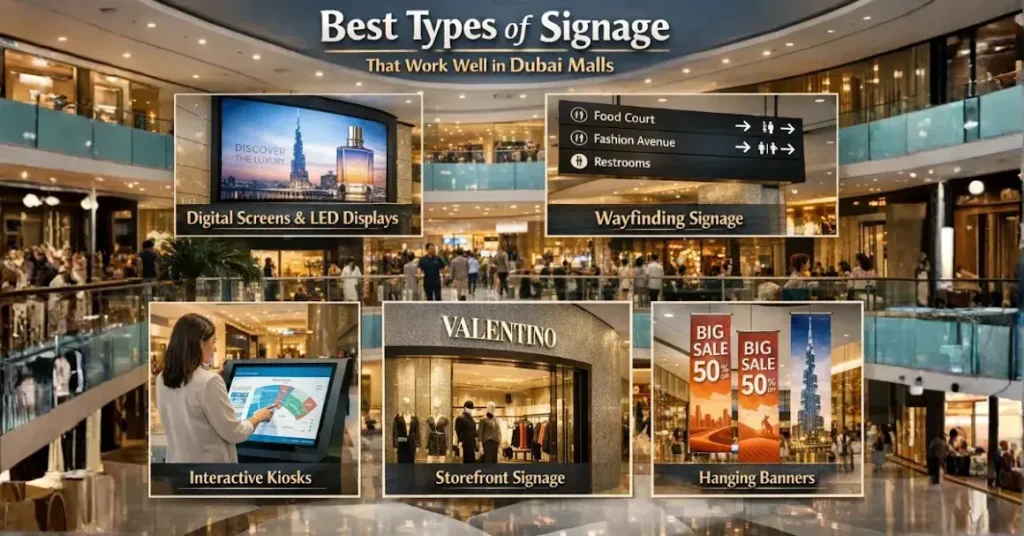
Choosing the right signage type is essential to meet Dubai mall signage rules while ensuring strong brand visibility. Certain signage options consistently receive approval while delivering high visual impact—smart tenants focus on these proven, compliant solutions.
High-Success Signage Options in Dubai Malls
- 3D acrylic letters with LED backlighting combine compliance-friendly materials with premium visual appeal. Such installations consistently pass approval processes while creating a sophisticated brand presence.
- Halo-lit metal letters offer exceptional durability and a professional appearance. Material compliance rarely creates issues, and installation requirements are well-understood by approved contractors.
- Digital displays work well where permitted—but check property-specific restrictions carefully. Many Dubai malls limit digital signage to specific zones or tenant categories.
But why do these options succeed? The answer is simple—they use pre-approved materials, meet safety requirements, and align consistently with Dubai mall aesthetic and signage standards.
Tips to Get Your Signage Approved Faster
Faster signage approval means quicker store launches, less stress, and earlier revenue. While the process is structured, a few smart steps can significantly reduce delays.
Pre-Submission Best Practices for Faster Approval
Submit complete documentation packages every time. Incomplete submissions face automatic rejection without review, adding weeks to approval timelines unnecessarily.
Use pre-approved materials and suppliers whenever possible. Mall management and municipality reviewers recognize compliant suppliers, expediting review processes significantly.
Choosing the Right Signage Partners
Experienced signage consultants know approval processes intimately—their expertise prevents costly mistakes and reduces revision cycles.
Maintain regular communication with approval authorities throughout the process. Proactive updates demonstrate professionalism and often receive priority consideration.
Plan submissions during non-peak periods (avoiding Ramadan and major holiday seasons) when reviewer workloads are more manageable.
Conclusion: Ready to Navigate Dubai Mall Signage Approval?
Understanding Dubai mall signage approval processes is essential for avoiding delays, penalties, and compliance issues. With the right approach, tenants can ensure smooth approvals, maintain brand consistency, and launch their stores on time.
iDesign Ads brings over a decade of hands-on experience navigating mall tenant compliance across the UAE’s most prestigious retail destinations.
From design conception and approval submission to production and professional installation, we handle the entire process — so you can open on time and on brand.
Contact us today at https://www.idesignads.ae/ for your free compliance checklist and project consultation.
Frequently Asked Questions on Dubai Mall Signage Approval
1. How long does Dubai mall signage approval take?
Dubai mall signage approval takes 7–30 days depending on signage type and complexity. External signage usually requires 15–30 days, while internal and temporary signage can be approved within 5–15 days based on documentation and compliance.
2. Do I need approval for all signage in Dubai malls?
Yes, all signage in Dubai malls requires dual approval from mall management and Dubai Municipality, including temporary and promotional signage.
3. What happens if I install signage without approval in Dubai malls?
Installing signage without approval leads to immediate removal, fines between AED 5,000–50,000, and possible lease agreement violations.
4. What documents are required for Dubai mall signage approval?
Required documents include CAD design drawings, material specifications, trade license copy, landlord NOC, and structural calculations (if applicable).
5. How much does Dubai mall signage approval cost?
Dubai mall signage approval costs range from AED 1,000–5,000, depending on project complexity, excluding design, installation, and consultant fees.