Walk through any commercial strip in Dubai Jumeirah, Deira, Al Karama, Business Bay and you’ll notice something within seconds. Some shop signboards grab your attention instantly. Others blend into the background like they’re trying to hide. The difference between those two outcomes isn’t luck. It’s design.
Dubai is a city where retail competition is fierce, foot traffic moves fast, and first impressions are often the only impression you get. Your signboard isn’t a decoration. It’s your loudest salesperson, working around the clock without a break.
So what separates a signboard that pulls people inside from one they walk right past? After years of working across Dubai’s retail landscape, we’ve narrowed it down to seven design rules that consistently drive foot traffic whether you’re running a shawarma joint in Satwa or a luxury boutique in City Walk.
The 7 Design Rules That Drive Foot Traffic
- Visibility First — Can People Read It in 3 Seconds?
Here’s a test most signboards fail: stand 15 metres away from your shop. Can a stranger read your business name, understand what you sell, and feel compelled to walk closer all within three seconds?
That’s the window you get with pedestrians. With drivers passing by on Sheikh Zayed Road or Al Wasl Road, it’s even less.
A good signboard prioritises readability above everything else. That means clean typefaces, generous letter sizing, and minimal clutter. If your signboard tries to communicate your business name, tagline, phone number, Instagram handle, and opening hours all at once, it communicates nothing.
The best sign board makers in Dubai understand that restraint is what creates impact. Strip it down to essentials. Your name. What you do. Done.
- Contrast Is King — Light vs Dark, Not Just Colour
Colour gets all the attention in signboard discussions, but contrast is what actually makes text readable from a distance. A red sign with orange text might match your brand palette beautifully, but nobody can read it from across the street.
The principle is straightforward: dark text on a light background, or light text on a dark background. High contrast between foreground and background elements is what makes letters pop against Dubai’s bright skyline.
This matters even more in a city drenched in sunlight for most of the year. What looks stunning on a designer’s screen often washes out completely under midday sun. Any reputable signage making company in Dubai will test colour combinations under actual outdoor lighting conditions before finalising production — and if they don’t, that’s a red flag.
- Arabic + English — Both Must Be Legible, Not an Afterthought
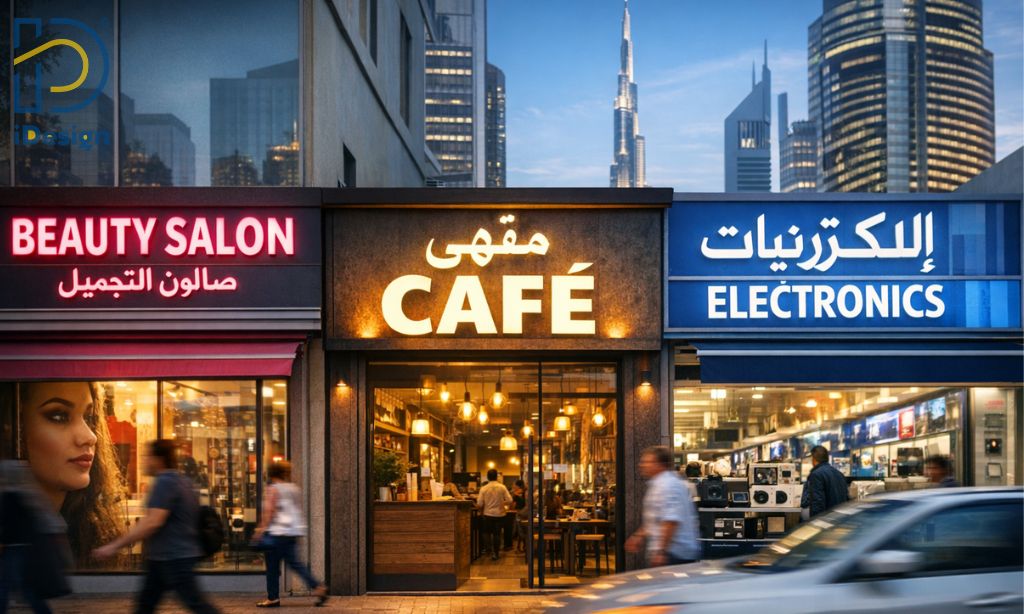
Dubai Municipality regulations require bilingual signage for commercial establishments, and for good reason this city serves a genuinely multilingual population. But compliance and good design aren’t the same thing.
Too often, businesses treat the Arabic text as an obligation. They’ll have a beautifully designed English name in a premium font, then squeeze the Arabic translation underneath in a generic typeface at half the size. That’s not bilingual design. That’s ticking a box.
Effective bilingual signboards give both languages visual weight. The Arabic doesn’t need to be identical in style, but it should feel intentional and equally considered. This isn’t just about regulation roughly half your potential customers in many Dubai neighbourhoods read Arabic as their primary language. Ignoring that readership is ignoring revenue.
- Materials That Survive Dubai’s Heat, Dust & Humidity
Dubai’s climate is genuinely harsh on outdoor signage. Summer temperatures regularly push past 45°C. Humidity along the coast can exceed 90%. Sand and dust settle on every surface. Salt air corrodes metals that would last decades in milder environments.
Cheap acrylic warps. Low-grade vinyl peels. Exposed steel rusts. Within six months, a poorly made signboard can look like it’s been abandoned for years.
Materials matter enormously here. Marine-grade aluminium, UV-stabilised acrylic, powder-coated steel, and high-quality LED modules rated for extreme heat — these aren’t premium upgrades in Dubai. They’re baseline requirements. A signboard company in Dubai worth working with will specify materials based on your sign’s specific exposure conditions, not just what’s cheapest to fabricate.
- Illumination — Your Signboard Must Work Day AND Night
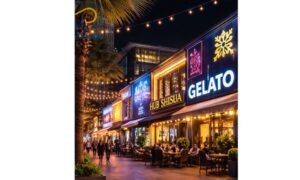
Dubai doesn’t sleep at 6 PM. Retail hours stretch late into the evening, and some of the heaviest foot traffic in areas like JBR, Global Village, and Downtown happens well after sunset. A signboard that looks great at noon but disappears at night is doing half its job.
Backlit channel letters, edge-lit panels, and front-illuminated 3D signage in Dubai have become standard for good reason. They maintain visibility across all lighting conditions while adding a premium dimension to your storefront.
LED technology has made illuminated signage far more energy-efficient and longer-lasting than older fluorescent or neon options. The running costs are minimal. The visibility gains are substantial.
- Size Matters — Match Your Sign to Your Entrance & Street
A sign that’s too small for your facade looks timid and forgettable. A sign that’s oversized looks cheap and aggressive. Getting proportions right requires reading the physical context your building’s architecture, your shop’s frontage width, the street width, typical viewing distance, and neighbouring signage.
Ground-floor retail on a narrow Deira lane needs a completely different signboard scale than a standalone unit facing a six-lane highway in Dubai South. This seems obvious, but mismatched sizing remains one of the most common mistakes in Dubai’s commercial signage.
Before committing to a size, visit your location at different times of day. Observe where people actually walk and drive. Measure sight lines. The right sign board makers in Dubai will conduct a site survey as standard practice before producing anything.
- Brand Consistency — Your Sign Should Look Like It Belongs to Your Business
Your signboard should feel like a natural extension of everything else your customer experiences your packaging, your interiors, your website, your social media presence. When someone sees your sign, walks inside, and picks up your menu or product, the visual language should connect seamlessly.
This means consistent use of your brand colours, typography, and overall design language across every touchpoint. A signboard that looks disconnected from the rest of your brand creates a subtle but real sense of distrust. Customers notice inconsistency even when they can’t articulate it.
Types of Shop Signboards That Work Best in Dubai
Not every sign type suits every business or location. Here’s what consistently performs well across Dubai’s retail environment.
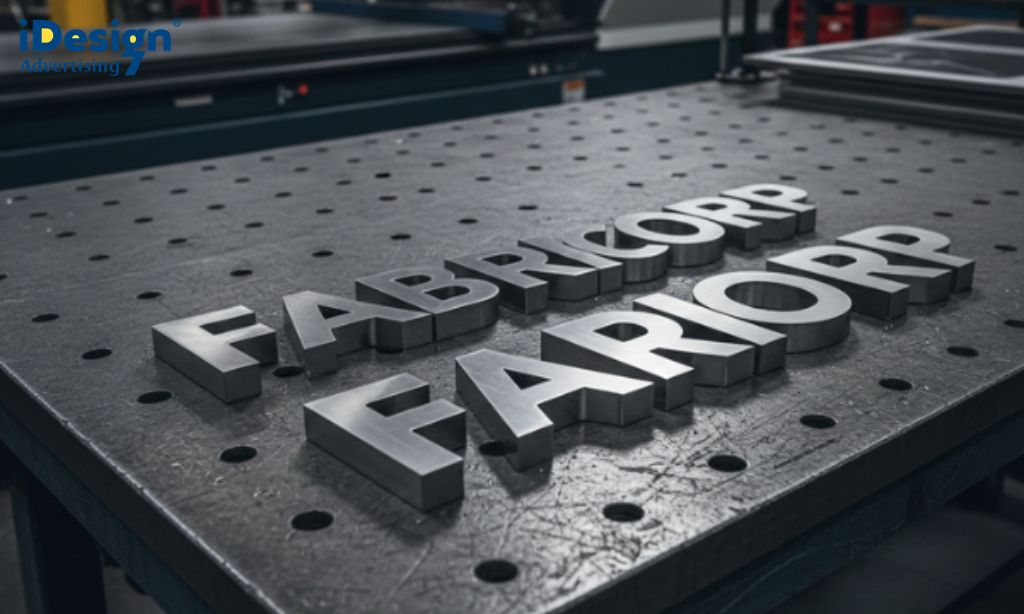
3D letter signs remain the most popular choice for storefronts. Individual raised letters whether acrylic, metal, or PVC create depth and shadow that flat printed signs simply cannot match. They photograph well, hold up physically, and carry a premium perception. The demand for quality 3D signage in Dubai has grown steadily as businesses recognise the visual advantage.
Lightbox signboards work well for shops that need large-format branding with even illumination, particularly in malls and indoor commercial corridors. LED channel letters combine the three-dimensional presence of raised lettering with built-in illumination for excellent day-and-night performance. Totem and pylon signs serve businesses set back from the road, pulling visibility out to the street where pedestrians and drivers can actually see them.
Common Signboard Mistakes Dubai Businesses Make (And How iDesign Fixes Them)
After working with hundreds of Dubai businesses, certain mistakes show up repeatedly. Overcrowded designs that try to say too much. Poor material choices that degrade within months. Ignoring bilingual requirements until the last minute, resulting in awkward layouts. Choosing a signboard size based on budget alone without considering the viewing environment. Skipping illumination to cut costs, then wondering why evening walk-ins have dropped.
At iDesign, every signboard project starts with a site assessment and a conversation about your brand, your customers, and your specific location challenges. We handle design, municipality approvals, fabrication, and installation as a single integrated process — because a signboard is only as good as its weakest stage.
Conclusion
A shop signboard in Dubai isn’t a one-time purchase you forget about. It’s a long-term asset that shapes how thousands of people perceive your business every single day. The seven rules above visibility, contrast, bilingual design, durable materials, illumination, correct sizing, and brand consistency aren’t abstract theory. They’re practical principles drawn from what actually works on Dubai’s streets.
If your current signboard isn’t pulling its weight, or if you’re launching a new location and want to start strong, talk to a signboard company in Dubai that treats your sign as a business investment not just a fabrication job.
FAQ
How much does a shop signboard cost in Dubai?
Costs vary widely based on size, materials, and complexity. A simple lightbox might start around AED 1,500, while custom 3D channel letter signs with LED illumination for a larger storefront can range from AED 5,000 to AED 25,000 or more. The best approach is getting a detailed quote based on your specific requirements and location.
Do I need municipality approval for my signboard in Dubai?
Yes. Dubai Municipality requires permits for commercial signage, including specifications for size, placement, bilingual text, and lighting. A professional signage making company in Dubai will handle the approval process as part of their service.
How long does it take to design and install a signboard in Dubai?
From initial consultation through design, approval, fabrication, and installation, the typical timeline runs between two to four weeks. Complex projects or those requiring extensive municipality coordination may take longer.
What is the best type of signboard for a small shop in Dubai?
For smaller retail spaces, 3D acrylic letter signs or slim LED lightboxes tend to offer the best balance of visibility, aesthetics, and cost. The right choice depends on your frontage, street conditions, and brand identity.
How often should I replace or maintain my signboard?
With quality materials and proper installation, a signboard in Dubai should last five to eight years. However, annual cleaning and periodic electrical checks for illuminated signs will keep everything looking sharp and functioning safely throughout that lifespan.
Post a comment Cancel reply
Related Posts
Why iDesign Advertising Is the Best Signage Company for High Quality Business Signboards
In today’s competitive market, every business needs strong visibility. A well-designed signboard is often the…
Designing for All Ages: Inclusive Signage Strategies for the UAE’s Year of the Family (2026)
The UAE has officially declared 2026 as the Year of the Family – a national…
Outdoor Advertising Light Boxes: Do They Outperform Billboards?
One of the best strategies for getting widespread attention is still outdoor advertising. Marketers and…
How AI Is Shaping Digital Signage and Displays
Real-Time Content Personalization Digital signage can dynamically modify content according to audience information and environmental…